- Home
- Ideas & Advices
- Film Location Rentals in France: What the Market Actually Looks Like From the Inside
Film Location Rentals in France: What the Market Actually Looks Like From the Inside

Description
Let me tell you about the worst shoot of my life.
It was a Toyota campaign in Marseille. We'd spent weeks getting the permits to clear the Rue de Paradis entirely, every parked vehicle removed, the street locked down for the shoot. The night before, our location manager slept in her car to make sure nobody parked there overnight. She was still there at 6am. One car had slipped through. A yellow Renault Twingo with a steering wheel lock on it.
The shoot schedule had changed at the last minute because of a talent availability issue, which meant the permit was now valid for the following day, not that day. We called the tow truck. They refused, wrong date on the paperwork. We knocked on every door in the neighborhood trying to find the owner. Nothing. In the end, one of our production managers opened the car with a coat hanger, released the handbrake, and pushed it far enough down the street to clear the frame. The steering wheel was locked straight, which was the one piece of luck we had that morning. We got the shot.
The next day, same project, shooting in the narrow streets of the old quarter. A man, clearly not entirely sober, sat down on the hood of the Toyota and refused to move. Aggressive, loud, completely blocking the setup. It took us ten minutes to figure out what he actually wanted. He wanted to be on camera. He wanted to be famous for a day. So I took him aside, filmed him posing in front of a graffiti wall on my phone, told him he looked great. He got up, shook my hand, and walked away. We were back on set in fifteen minutes.
That's what film location work in France actually looks like sometimes. And that's why preparation matters more than anything else.
The private market that doesn't show up in search results
Most international productions arrive in France assuming the location market works the way it does at home. Listed spaces, posted rates, a transactional process. The reality is different, and the difference is significant.
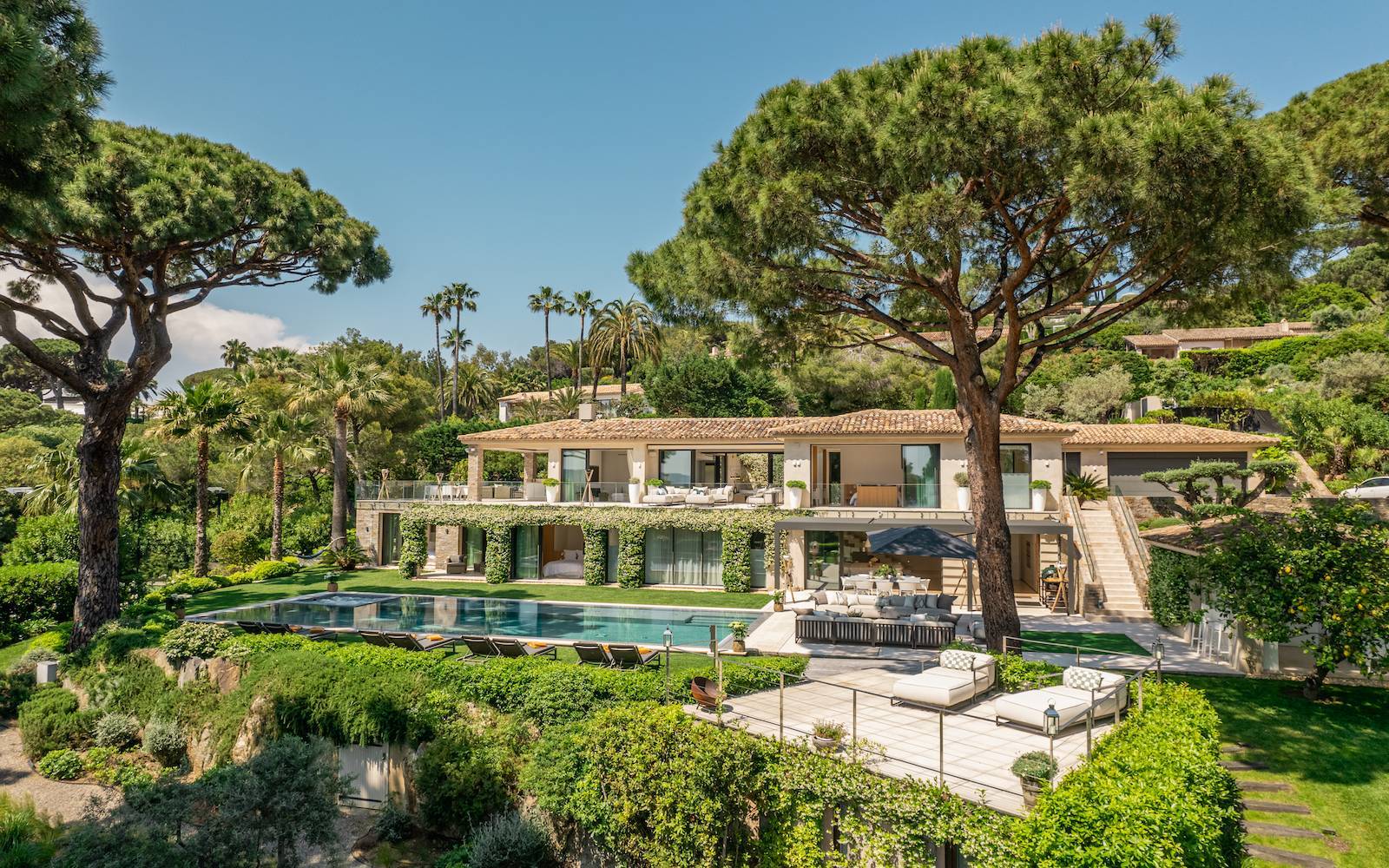
A substantial portion of the most interesting filming spaces in France are never listed anywhere publicly. They exist within networks built over years between location agencies and private owners, châteaux whose owners have hosted three Dior campaigns and a Ridley Scott film and have no interest in being found by anyone they don't already know, architect-designed villas on the Côte d'Azur that accept two or three productions a year by referral only, Parisian townhouses that have appeared in a dozen feature films without ever showing up on a platform.
Getting access to these spaces requires a relationship, not a search. That relationship is built on a track record of productions that left the property in the condition they found it, paid on time, and treated the owner's home with the respect it deserved. When that record exists, doors open. When it doesn't, you're working with what's publicly available, a much smaller and considerably less interesting pool.
I learned this the hard way too, in the other direction. We had a contemporary villa with a pool and sea views in the South of France that we'd used successfully for several productions. Everything always ran smoothly. Then one morning at 7am my phone rang. The gated community's security guard was refusing access to the production trucks. I got on my motorbike and rode straight there.
The building manager had decided he wanted a cut of the production fees. I negotiated with him for an hour and a half on the pavement outside the gate while the crew sat waiting in their trucks. We eventually agreed on €1,500, which I paid him on the spot from Easy Production's account. I didn't pass that cost on to the client, it was our responsibility to have sorted this in advance, and we hadn't anticipated that a syndic who'd always been cooperative would suddenly decide there was money to be made. He wasn't wrong, actually. He just chose a terrible moment to make that point.
We now have a pre-production conversation with every building manager and every co-ownership body before any shoot, without exception. That conversation didn't used to be on our checklist. It is now.
The legal framework that catches out foreign productions
France has a specific legal instrument for filming on private property: the convention de mise à disposition. It's not a standard rental agreement. It establishes the terms of a temporary occupation, defines authorized zones within the property, sets crew numbers, specifies load-in and load-out schedules, and addresses the conditions under which the owner can terminate the arrangement. It needs to be drafted correctly, and the drafting is where foreign productions regularly stumble.
Three legal points that create problems most often.
Architect's intellectual property rights. In France, an architect retains intellectual property rights over the buildings they design. If you shoot in an architect-designed villa and use those images commercially, you may need to clear the architect's rights separately from the owner's permission. This applies even decades after construction. It's easy to overlook and expensive to resolve once the images are in post-production.
Image rights on private property. The right to photograph a private property for commercial use is distinct from the right to occupy it. An owner can grant access to their property and simultaneously retain the right to approve or refuse commercial use of images showing recognizable features of their home. This gets negotiated and written into the convention before the first camera goes up.
Co-ownership regulations. Many of the most interesting urban filming spaces in France exist within buildings governed by a co-ownership agreement. The individual owner's permission may be insufficient if the co-ownership regulations restrict commercial activity or require advance notice to the building's management body. The situation I described above, with the syndic at the gate, happens in some form or another on a regular basis. It's not an edge case. It's a standard risk that needs to be managed before the trucks leave the depot.
The TRIP tax rebate: what it actually requires
The Tax Rebate for International Productions offers up to 30% back on qualifying French expenditure. The headline figure is real. The practical requirements are more demanding than most productions expect.
The rebate applies to a defined list of eligible expenses, French crew wages, location fees paid to French entities, equipment rental from French suppliers, certain post-production costs carried out in France. It does not apply to everything you spend in the country.
To access it, a foreign production needs a French co-producer or qualified line producer in a substantive legal and financial role. This isn't a formality that can be satisfied by putting a French name on a document. It's a working relationship that affects how the production is structured, how contracts are written, and how expenditure is documented for the CNC application.
The application goes in before shooting begins. The rebate is paid after the production closes its accounts and submits final documentation. For productions planning to benefit from it, the conversation with a French co-producer needs to happen at the development stage, not after locations are booked and the budget is locked.
For smaller productions that don't meet the minimum spend thresholds, it may not apply at all. A French production partner can tell you within a single conversation whether your project qualifies.
How collective agreements affect your location choices
French productions operate under collective agreements that govern working conditions for every crew category in considerable detail. These affect location choices in ways that foreign productions consistently underestimate.
The most immediately relevant is the regulation around travel time. Crew members are entitled to compensation for travel beyond a defined radius, and productions are obligated to cover costs or provide transport beyond certain distances. A location ninety minutes from Paris may be significantly more expensive in real terms than a location forty-five minutes away, even if the location fee is identical. That calculation needs to happen before the location is confirmed, not after the budget is presented to the client.
Rest period regulations interact with location logistics in similar ways. Long shooting days at a location requiring significant travel constrain the following day's schedule in ways that compound across a multi-day shoot. A French production manager who knows the conventions collectives factors this in from the start. A foreign production that discovers it mid-prep is renegotiating under pressure.
The regional differences that change how you work
Paris and Île-de-France is the most regulated environment. Permit processes are more complex, neighbor sensitivities are higher, and moving production vehicles through dense urban zones requires advance planning that provincial cities don't demand to the same degree. The inventory of remarkable interior spaces is unmatched anywhere in France, but accessing them efficiently requires familiarity with a market that operates largely through personal introduction.
The South of France, Provence, the Var, the Côte d'Azur, offers the best conditions for exterior shooting in terms of light and climate. More than 2,800 hours of sunshine per year, and a quality of natural light that cinematographers describe differently from anywhere else in Europe. The private owner ecosystem is well-developed and experienced with productions. The challenge is timing: between May and September, the best properties run at close to full occupancy and rates climb 20 to 30% above the baseline. Productions planning to shoot in this region in summer need to be in conversation about locations six months out.
Normandy and the Loire Valley offer a category of filming space the South doesn't: the grand French country house and château in a northern light, with the landscape and atmosphere that comes with it. Productions shooting period content regularly use these regions for visual authenticity. The production ecosystem is thinner, which means local expertise matters more, not less.
The numbers as they actually stand in 2026
Contemporary architect-designed villa on the Côte d'Azur: €3,500 to €15,000 per day, with peak season adding 20 to 30% on top.
Château or prestige estate: €4,000 to €20,000 per day.
Provençal bastide or mas: €2,000 to €7,000 per day.
Industrial loft in a major French city: €1,800 to €6,000 per day.
Haussmann apartment in Paris: €2,500 to €8,000 per day.
Agency fee: approximately 20% of the location fee. Prep and wrap days: typically 50 to 70% of the shoot day rate.
Image rights and architect's rights are negotiated separately. For a global multi-year campaign, these can add 20 to 30% to the total location cost. They are agreed before production starts, never after.
What Easy Spaces does that changes the equation
Easy Spaces is a film location agency I co-founded with my wife Sika, a producer. We didn't come from real estate. We came from set. Sika from the production side, me from fifteen years behind a camera for Corbis and Getty. We built the agency because we'd lived through enough location problems to know exactly where they come from, and because we thought we could build something that prevented most of them before they happened.
When a property enters our catalog, it's been assessed on what determines whether a production day runs or fails: real available electrical power, vehicle access widths measured at the narrowest point, sun orientation modeled at actual shooting hours, ambient noise levels checked when it matters, net usable square footage after accounting for zones the production can't use. Technical files include floor plans, solar orientation data, parking logistics, confirmed noise curfew times, and whether the property sits within a co-ownership structure that requires advance negotiation with the building management.
The part of the catalog that isn't visible publicly, the private homes, the family-owned domaines, the villas whose owners work by referral only, exists because of twenty years of relationships maintained through productions that went well. And a few, like the Toyota shoot in Marseille, that went badly before they went well.
For projects that need something outside the existing catalog, a space that's never been on screen, a specific architectural type, unusual technical requirements, scouts are on the ground within forty-eight hours maximum.
Services include mobile dressing room rentals, professional lighting equipment, and direct coordination with property owners on all administrative and contractual matters. One point of contact from the first inquiry to the last day of shooting.
Questions we get asked in every first conversation
How do architect's rights work and how do we clear them? The architect or their estate holds intellectual property rights over the design. For commercial use of images showing recognizable architectural features, you need a separate authorization from the rights holder in addition to the owner's permission. Easy Spaces identifies properties where this applies at the catalog stage.
What's the real lead time for the South of France in peak season? Four to six months for the most sought-after addresses. The best properties between June and August run at close to full occupancy. If your shoot dates are fixed, start this conversation now.
How does the TRIP rebate affect how we structure the production? It requires a qualified French co-producer in a substantive role, a CNC application before shooting begins, and final expenditure documentation after the production closes. If you're planning to use it, the conversation with a French co-producer needs to happen at development stage.
What happens if a co-ownership structure blocks access on the day? It shouldn't, because we identify co-ownership constraints before the site visit and address them in the convention de mise à disposition. For productions working without this verification, discovering the problem on the morning of the shoot means negotiating under pressure with a building manager who knows exactly what leverage he has. I've been in that conversation. It's not where you want to be.
Can locations be modified for the shoot? With written consent from the owner, integrated into the convention before signing. Reinstatement by qualified professionals is mandatory before the property is returned. The initial photographic walkthrough is the reference document.
At what crew size do logistics change significantly? Around twenty people on set is where you need a dedicated production manager separate from the technical crew. Above thirty-five, vehicle access, electrical supply, catering space, and circulation management all need explicit planning. The location assessment for a crew of fifty looks materially different from the assessment for a crew of eight.
Camille Chevreuil is co-founder of Easy Spaces and Easy Production. A photographer for Corbis and Getty for fifteen years, he works with luxury, automotive, and interiors brands on location, from the first scout through to the end of production.

Finding a Film Location: The Expert Guide to Location Scouting in France


Photoshoot House Rentals in France | Easy Spaces
Where to Find Filming Locations in the South of France?