- Home
- Ideas & Advices
- Filming Locations South of France: The Insider's Guide for International Productions (2026)
Filming Locations South of France: The Insider's Guide for International Productions (2026)


Description
The South of France has been one of cinema's most enduring obsessions. Not because of nostalgia, and not because of Cannes. Because the light is genuinely unlike anywhere else in Europe, and because within a two-hour drive you can move from a Baroque château in the Luberon to a brutalist seafront villa in Nice to a wild, almost lunar limestone landscape in the Alpilles. For a film production that needs visual variety without the logistical nightmare of moving a full crew across three countries, that concentration of contrasting filming locations is hard to match.
This guide is written for production companies, line producers, and directors of photography coming from the US, the UK, or elsewhere who are planning a shoot in the South of France and want to understand what's actually available, and what it actually takes to make it work.
Why the South of France works for international productions
The obvious answer is the light. More than 2,800 hours of sunshine per year across most of the region, with a quality of natural light, warm, direct, with deep shadows, that significantly reduces the need for artificial fill. For a director of photography used to working in London or New York, shooting exterior sequences in Provence in late spring or early autumn feels like a different discipline. The light does work that equipment would otherwise have to do.
But the more interesting answer is the architectural range. The South of France isn't one visual identity, it's at least six, and they sit close enough to each other to be genuinely useful for a production with a varied shot list.
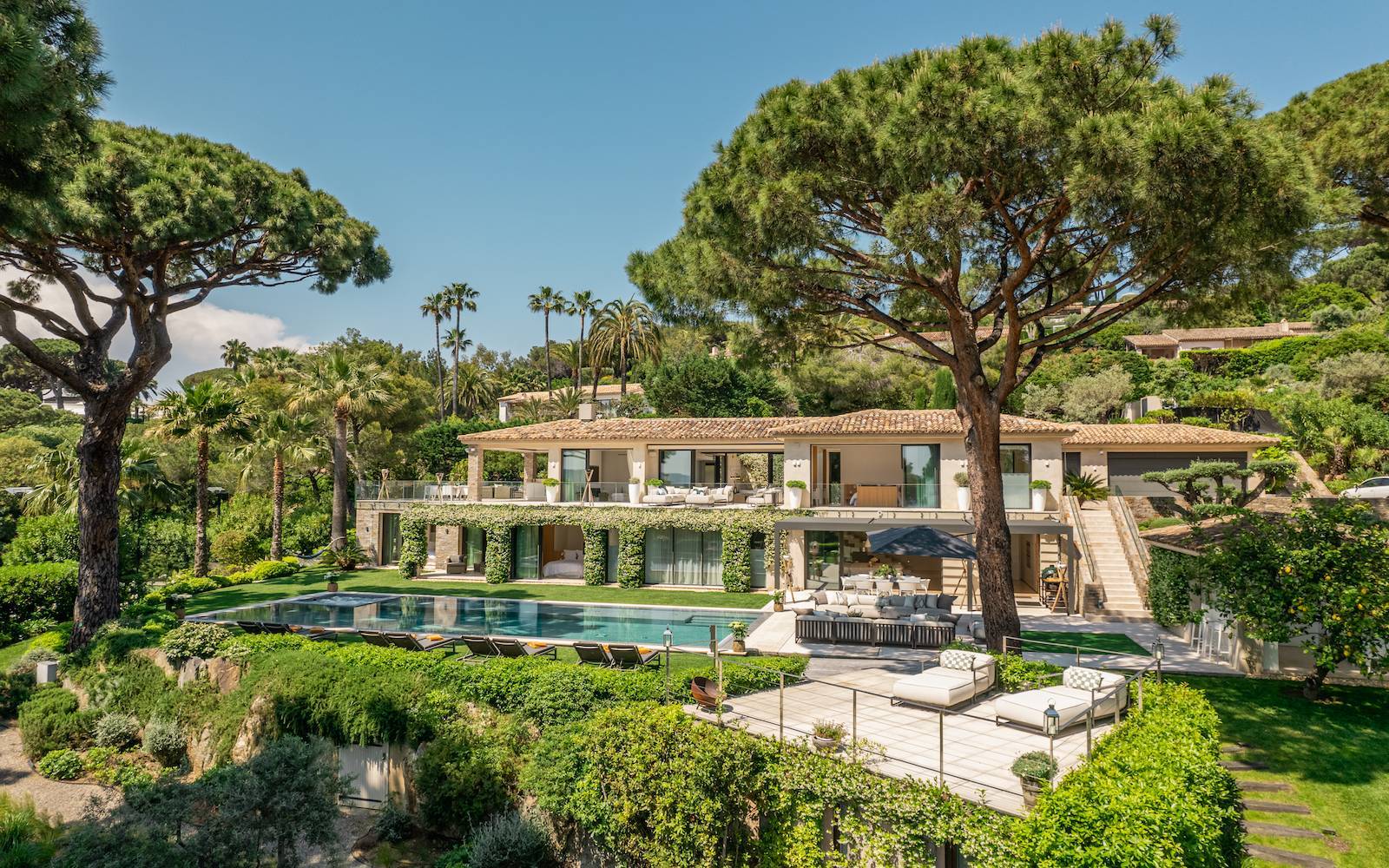
There's the Riviera: Cannes, Nice, Antibes, Saint-Tropez. Modernist and contemporary villas stacked on hillsides above the Mediterranean, infinity pools dissolving into the horizon, interiors that look like they were designed for the kind of brand campaign where the product barely appears on screen. This is the dominant aesthetic for luxury automotive, watchmaking, and high-end cosmetics. It's also the most in-demand and the most expensive.
There's Provence: the Luberon, the Alpilles, the Var. Bastides and mas with metre-thick stone walls, lavender fields if you time it right (June to mid-July), olive groves that have been in the same place for three centuries. The palette here is ochre, sage green, and the particular blue of a Provençal sky in early morning. It reads as authenticity, the real kind, not the manufactured kind, which is why food and beverage brands, natural cosmetics, and lifestyle productions keep coming back.
There's Marseille, which is its own thing entirely. Industrial port architecture, raw concrete social housing blocks that photograph like brutalist sculpture, the Calanques limestone cliffs twenty minutes from the city centre. It's a city that still surprises people who arrive expecting the Riviera and find something much more interesting.
And then there's what's between all of these, the garrigue landscape of the Gard, the Camargue wetlands, the Gorges du Verdon, medieval hill villages that look like they haven't been touched since 1350. Each one is a specific visual language. Each one is reachable from a central base in Marseille or Nice without an overnight stay.
The locations that actually get used, and why
Contemporary villas on the Côte d'Azur
These are the filming locations in the South of France that most international productions come looking for first. Glass and concrete structures cantilevered over the sea, designed by architects whose names carry weight, and whose intellectual property rights over the building need to be cleared before you can use the location commercially. That's not a detail: it's a contractual step that catches out productions that don't know the French system.
What these properties offer technically:
- Abundant natural light from large glazed facades
- Flat terraces that allow dolly and gimbal moves without surface problems
- Pools that extend the visual horizon
What they don't always offer: easy truck access (many are on private roads in steep residential zones), adequate electrical supply (most residential properties run on single-phase 6 to 9 kVA, which isn't enough for a cinema lighting setup), and soundproofing from road noise or neighbouring properties.
The day rate for this category runs from €3,500 to €15,000 depending on the property, the season, and what you're shooting. Peak season, May through September, pushes rates up by 20 to 30% and availability down sharply. Book four to six months ahead for the most sought-after addresses.
Provençal bastides and mas
Completely different logistically, and completely different visually. These are properties with history built into the walls, literally. Stone construction, original terracotta floors, beamed ceilings, gardens that feel grown rather than designed. For any photo or film production that needs warmth, texture, and a sense of time passing, there's no substitute.
The practical advantages:
- Many are set in open agricultural land, which means truck access is straightforward
- Noise pollution is minimal
- There's often space to park a catering truck in the grounds, something that matters more than people realise when you're feeding forty people three times a day
The limitation is floor plan: historical buildings weren't designed with crew flow in mind, and the usable floor area is sometimes smaller than the total surface suggests. Day rates in this category: €2,000 to €7,000. More forgiving in terms of last-minute availability than the Riviera, though the best properties still go quickly in spring and autumn.
Industrial and port spaces in Marseille
Underused by international productions, which is partly why they're interesting. The former industrial buildings of the Arenc and Belle de Mai districts offer ceiling heights above 5 metres, ground-level loading access, and a visual rawness that reads very differently from anything you'd find on the Riviera. Useful for fashion, music videos, technology campaigns, anything that needs an urban, unpolished backdrop.
Acoustics are often better here than in residential villas, which matters for sync sound. Electrical supply is more likely to be adequate, or at least easier to supplement with a generator. Day rates: €1,800 to €5,000.
Exterior landscapes
The Luberon, the Alpilles, the Calanques, the Camargue; these filming locations in the South of France require a different kind of planning, because you're working with public or semi-public land rather than a privately rented property. Permits come from regional or national park authorities rather than a mairie. The process is manageable but takes longer than most international productions expect: allow six to eight weeks for a significant exterior shoot in a protected natural area.
The payoff is visual access to landscapes that are genuinely cinematic in a way that can't be dressed or manufactured. The Calanques limestone in late afternoon light. The Camargue in early morning mist. The lavender fields of the Luberon in the third week of June. If your production has the flexibility to time the shoot around seasonal conditions, these locations deliver something no interior can replicate.
What international productions need to know about the French production system
Film permits. France has a relatively straightforward permit system for private locations, you work through the owner, establish a convention de mise à disposition (a location agreement), and that's the primary legal framework. For public spaces, streets, or protected sites, you'll need authorisation from the relevant local authority. For anything in central Marseille or Nice that involves restricting traffic or parking, allow at minimum three to four weeks.
The CNC and tax incentives. France's Centre National du Cinéma offers a tax rebate, the TRIP (Tax Rebate for International Productions), of up to 30% on eligible French expenditure for foreign productions shooting in France. It's not automatic; it requires a French co-producer or line producer and meeting minimum spend thresholds. But for a substantial shoot, it's worth understanding. A French line producer will know the mechanics; it's not something to figure out from scratch on your first project here.
Crew and union regulations. French film crews work under collective agreements (conventions collectives) that cover working hours, travel time, and rest periods in detail. The regulations around maximum driving time to set, typically a 50-kilometre radius from a defined base, affect which locations are viable for a given crew on a given day. This isn't an obstacle, but it needs to be factored into location selection from the start, not retrofitted afterwards.
Language. Most experienced French crew in the South of France have at least working English. Property owners are more variable. Having a French-speaking line producer or location manager on the ground isn't optional for a smooth production, it's the difference between a location visit that produces useful information and one that produces polite confusion.
Electrical supply. Worth stating again because it catches out almost every production that doesn't ask in advance: French residential properties are typically on single-phase supplies of 6 to 12 kVA. A film lighting setup needs 18 kVA at minimum, 36 kVA for a full rig. A silent generator is often the solution, which means budgeting for it, finding a parking spot for it close to the set, and running cable from it, all of which need to be confirmed during the technical recce, not on the shoot day.
Planning a technical recce in the South of France
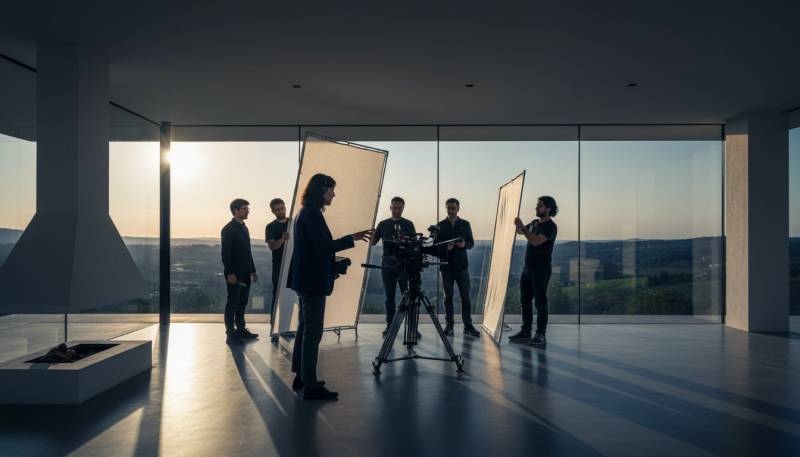
A technical recce for filming locations in the South of France typically covers three to five properties over two days, with a location manager or agency representative who knows the properties and can answer the questions that matter:
- Actual electrical capacity
- Gate widths for production trucks
- Sun orientation at the hours you plan to shoot
- Ambient noise levels
- Parking for trucks and unit base
The solar orientation point is more important than it sounds. A terrace that's perfect at 8am is in deep shadow by 11am if the wrong building is to the east. An application like SunCalc lets you model the sun position at any address on any date, it's a standard tool for location scouting, and using it before a recce saves visits to properties that won't work for your specific shoot window.
For large productions, the recce should also identify a fallback for each primary location. Weather in the South of France is generally reliable, but a mistral can ground a drone operation or make outdoor shooting impractical for days at a time. Having an interior alternative pre-approved and on standby isn't pessimism, it's professional practice.
Budget reference points for international productions (2026)
- Côte d'Azur contemporary villa: €3,500 to €15,000 per day
- Provençal bastide or mas: €2,000 to €7,000 per day
- Marseille industrial space: €1,800 to €5,000 per day
- Agency fee: approximately 20% of the location fee
- Prep and wrap days: typically 50 to 70% of the shoot day rate
- Location management on the ground: budget separately, it's not included in the location fee
Image rights are a separate negotiation and depend on the duration and territory of the campaign. For a global multi-year campaign, this can add 20 to 30% to the total location budget. It needs to be agreed before production starts, not when the images are already in post.
For productions eligible for the French tax rebate, the net cost of French expenditure can be reduced by up to 30%. It changes the conversation about what's financially viable.
What Easy Spaces does for international productions
Easy Spaces is a location scouting agency co-founded by Camille Chevreuil, a photographer who spent fifteen years shooting for Corbis and Getty, and his wife Sika Chevreuil, a producer. They built the agency because they'd been on enough productions to know where the problems come from, and it's almost never where the creative team is looking.
When a property enters the catalogue, it's been assessed on the criteria that matter for a shoot: real electrical capacity, access widths for production trucks, sun orientation at the actual shooting hours, ambient noise levels, net usable floor area (not the residential surface area on the listing). Technical files include floor plans, solar orientation data, and parking logistics.
For productions with specific briefs, a location that's genuinely never appeared on screen, an unusual architectural type, a very particular visual requirement, the agency runs a bespoke scouting service. Scouts respond within 48 hours.
If a location doesn't work out on the day for an unforeseen reason, alternatives are pre-identified. That's not a standard service offer, it's what happens when the people running the agency have actually been on a production that fell apart because a location failed at the last minute.
Frequently asked questions from international productions
Do you need a French production company to shoot in France? Not for a private location with no public space involvement. For shoots that require public permits, restrict traffic, or use protected landscapes, a French line producer with established relationships with the relevant authorities makes the process significantly faster and more reliable.
How far in advance should locations be booked? For Côte d'Azur properties in peak season (May to September), four to six months is realistic for the best addresses. Provençal properties and Marseille spaces are more flexible, three to eight weeks is workable for most projects outside peak season. For exterior permits in national parks or protected areas, allow six to eight weeks minimum.
Is the French tax rebate available to US or UK productions? Yes, under the TRIP scheme, for productions that meet the eligibility criteria and work with a French co-producer or line producer. The rebate applies to qualifying French expenditure and can reach 30%. A French production partner will know whether your project qualifies.
What's the process for getting a location quote? Send a brief, location type, shoot dates, crew size, type of production, and any specific visual requirements. Easy Spaces will respond with targeted options within 24 hours, along with preliminary technical information. A technical recce is then organised before any contract is signed.
Can locations be booked for a single day? Yes. Most properties in the catalogue work on a day-rate basis. Half-day rates (four to five hours) are available at 60 to 70% of the full day rate for photo shoots with smaller crews.
Camille Chevreuil is co-founder of Easy Spaces and Easy Production. A photographer for Corbis and Getty for fifteen years, he works with luxury, automotive, and interiors brands on location, from the first scout through to the end of production.


Filming Locations in France: The Complete Guide for Productions and Location Owners
Renting a House in France for a Film Shoot: A Practical Guide to Photo and Film Production (2026)
Filming And Photographic Production Services In Nice South Of France